

Division III soccer is college soccer played at NCAA member schools that offer no athletic scholarships, prioritizing a balanced student-athlete experience over athletic-first recruitment. NCAA Division III is the NCAA’s lowest division for college sports, yet it includes more than 450 schools and thousands of competitive soccer programs across the country. For high school players, junior college transfers, and their families, understanding what Division III soccer means structurally and practically is the first step toward making a well-informed college decision. The division is not a consolation prize. It is a deliberate choice with real advantages.
What is Division III soccer and how does it differ from D-I and D-II?
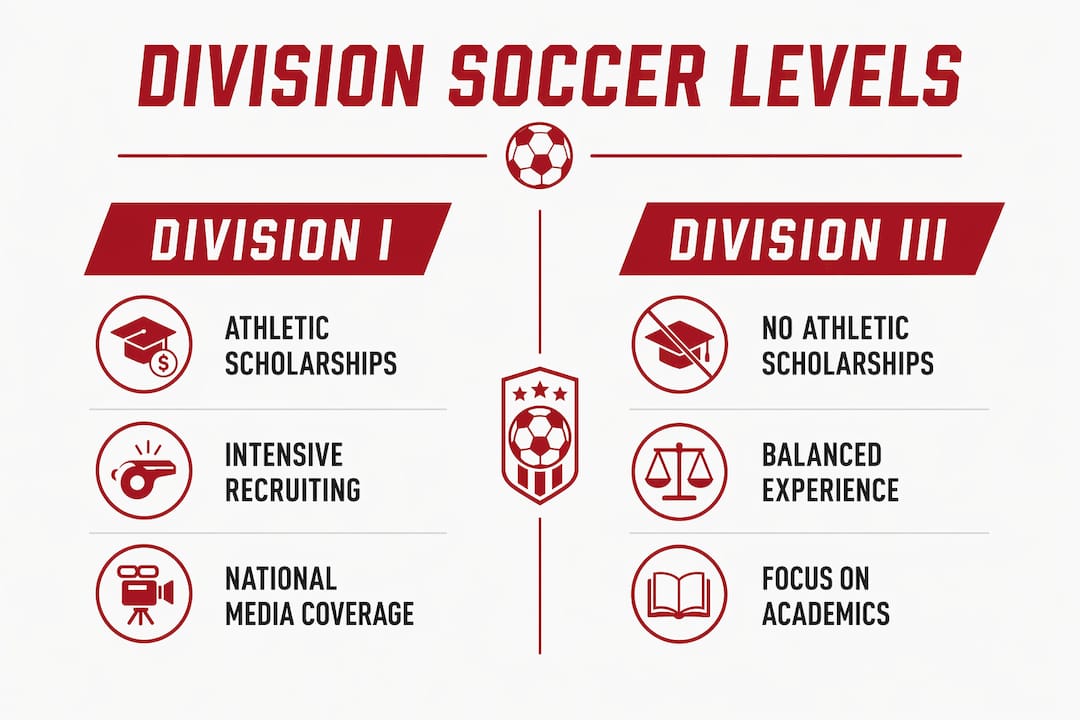
Division III soccer is defined by one non-negotiable rule: schools cannot offer athletic scholarships to student-athletes. That single policy shapes everything from recruiting culture to team dynamics to how coaches evaluate prospects. Division I programs like UCLA, Stanford, and Wake Forest can offer full or partial athletic scholarships to recruit top talent. Division II programs offer partial scholarships. Division III programs offer none, which means financial aid comes entirely through academic merit or demonstrated financial need.
The cultural difference is just as significant as the financial one. D-III emphasizes a balanced student-athlete experience where academics and campus life carry equal weight alongside athletics. Pacific Lutheran University’s athletics director describes the division’s ethos directly: athletics exist to build out a high-level educational experience, not to function as a pipeline to professional sports. That philosophy filters into how coaches recruit, how programs are structured, and how athletes spend their time.
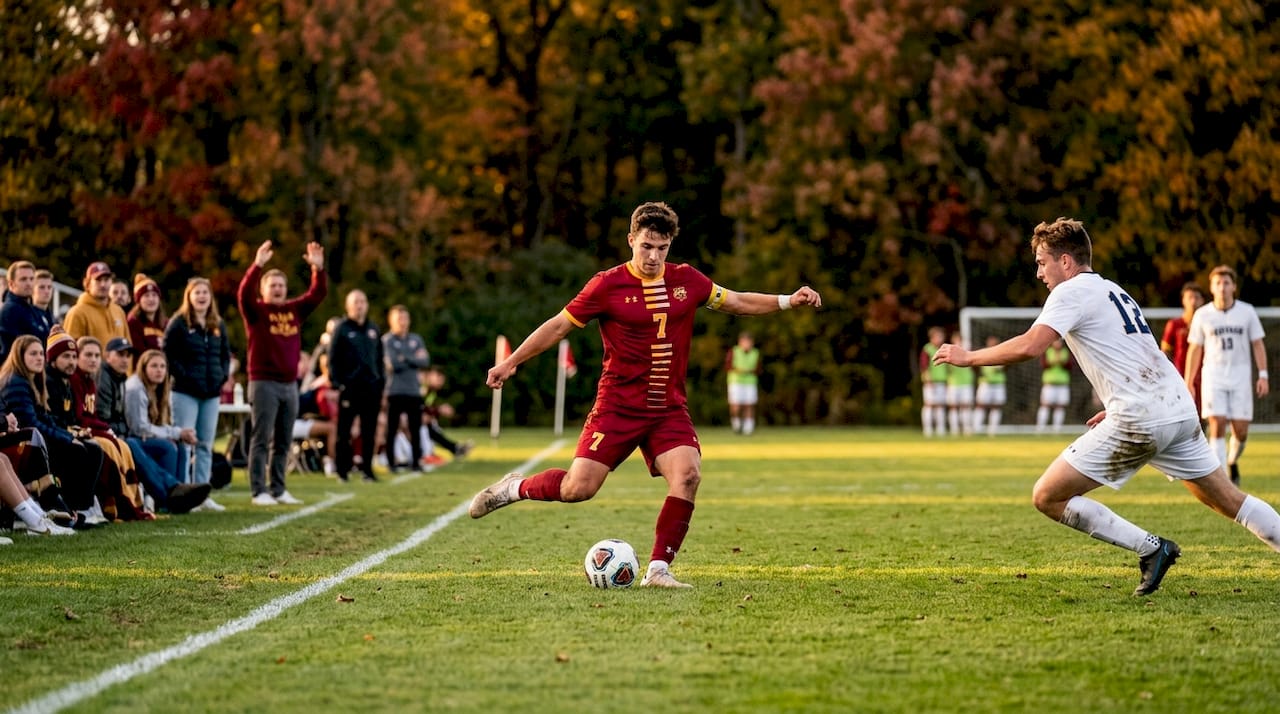
A common misconception is that Division III soccer is not competitive. That is false. Programs like Williams College, Messiah University, and Tufts University consistently produce technically skilled players and deep postseason runs. The difference is that players are not on campus primarily because of their soccer ability. They are students who also compete at a high level.
Pro Tip: If you are comparing D-III to NAIA programs, note that NAIA schools can offer athletic scholarships. Review the NAIA scholarship comparison before assuming D-III and NAIA are equivalent options.
| Feature | Division I | Division II | Division III |
|---|---|---|---|
| Athletic scholarships | Full and partial | Partial | None |
| Academic aid available | Yes | Yes | Yes (primary source) |
| Number of schools | ~350 | ~300 | ~450+ |
| Recruiting intensity | High | Moderate | Holistic and academic-focused |
| Postseason structure | Large national field | Regional brackets | 64-team national championship |
How does the Division III men’s soccer postseason work?
The NCAA Division III men’s soccer championship features a 64-team national field, making it one of the largest postseason structures in college soccer at any level. Understanding how teams qualify and how the bracket operates matters both for players evaluating programs and for families tracking their athlete’s competitive environment.
Teams enter the championship through two pathways:
- Automatic qualifiers: 43 conference champions receive automatic bids by winning their conference tournament or regular season title.
- At-large selections: 21 additional teams are selected based on overall resume, including record, strength of schedule, and regional performance.
- Early rounds: Played on campus sites, giving home teams a genuine competitive advantage and keeping travel costs low for families.
- Semifinals and final: Centralized at a neutral site. The 2025 championship semifinals and final were held at Kerr Stadium in Salem, Virginia.
- Timeline: The championship typically begins in early November and concludes in early December, fitting within the academic calendar.
Winning a conference championship is the most reliable path to the postseason. Strong teams that fall short in their conference tournament can still earn at-large bids based on their full-season body of work. This means regular season performance carries real weight, not just the final tournament result. Parents and coaches should track conference standings and overall team resumes from the start of the season, not just in the final weeks, to accurately assess postseason positioning.
| Round | Location | Format |
|---|---|---|
| First and second rounds | Campus of higher seed | Single elimination |
| Quarterfinals | Campus of higher seed | Single elimination |
| Semifinals | Neutral site (e.g., Salem, VA) | Single elimination |
| Championship final | Neutral site | Single match |
What are the benefits and challenges of playing Division III soccer?
Division III soccer offers a distinct set of advantages that are often undervalued by families focused exclusively on scholarships. The absence of athletic scholarships is real, but it does not define the full financial picture. More than 80% of Division III student-athletes receive institutional aid through academic grants or need-based packages. That figure means most D-III athletes are receiving meaningful financial support. It simply is not tied to their performance on the field.
The benefits extend well beyond finances:
- Academic balance: D-III programs are built around the idea that athletes are students first. Coaches at schools like Amherst College and Middlebury College recruit with academic fit as a primary criterion.
- Lower performance pressure: Without a scholarship on the line, athletes can develop at a healthier pace without the constant threat of losing financial support due to injury or form.
- Team culture: D-III programs tend to build tight-knit team environments because players chose the school for reasons beyond athletics alone.
- Broader campus engagement: D-III athletes participate in internships, research programs, and campus organizations at higher rates than their D-I counterparts, according to NCAA research.
The challenges are equally real and worth naming directly. The absence of athletic scholarships means families must plan finances through academic aid, need-based grants, and personal resources. Recruiting exposure is also different. D-III coaches do not attend as many national showcases as D-I programs, so players who rely solely on large events may be overlooked. Understanding how recruiting exposure works at the D-III level is a practical necessity, not an optional step.
Pro Tip: Review the NCAA scholarship rules that apply to all divisions before beginning any recruiting conversation. Knowing what is and is not permitted protects your eligibility.
How does recruitment for Division III soccer work?
Division III soccer recruitment is a holistic evaluation process that weighs academic profile, soccer ability, and personal fit simultaneously. Because athletic scholarships are unavailable, coaches are not competing for players with financial offers. They are building rosters of athletes who genuinely want to be at their institution. That shift changes the entire dynamic of the recruiting conversation.
Here is how the process typically unfolds for a high school or junior college player:
- Build your academic profile early. D-III coaches at academically selective schools like Washington University in St. Louis or Carnegie Mellon University will screen GPA and standardized test scores before extending serious interest. A strong academic record opens doors that talent alone cannot.
- Create a recruiting video and player profile. Coaches need to see you play before they invest time in a conversation. A focused highlight video of 3 to 5 minutes covering technical ability, positioning, and game intelligence is the standard starting point.
- Research programs that fit your academic and athletic goals. D-III includes schools ranging from small liberal arts colleges to mid-size universities. Identify 15 to 20 programs where you would genuinely thrive academically, then filter by soccer fit.
- Make direct contact with coaches. D-III coaches respond well to proactive outreach. Send a personalized email with your profile, academic information, and a clear statement of interest. Generic mass emails are easy to identify and easy to ignore.
- Attend campus visits. Recruiting exposure in D-III happens primarily through campus-based play and regional competition rather than centralized national events. Official and unofficial visits give coaches the chance to evaluate you in person and give you the chance to assess the program honestly.
- Track conference performance of target programs. Programs with consistent postseason appearances signal strong coaching, culture, and player development. Conference tournament results and overall team resumes are publicly available through NCAA.com.
- Understand the financial aid process. Work with each school’s financial aid office in parallel with the athletic recruiting process. Academic and need-based packages can be substantial at many D-III institutions, particularly private liberal arts colleges with large endowments.
The recruiting timeline for D-III is generally less pressured than D-I, but that does not mean it should be approached casually. Coaches fill roster spots on their own schedule, and strong candidates commit earlier each cycle. Starting the process in the sophomore or junior year of high school gives you the most options.
Key takeaways
Division III soccer is a legitimate, competitive college soccer pathway that trades athletic scholarships for academic balance, institutional aid, and a student-athlete culture built around long-term development.
| Point | Details |
|---|---|
| No athletic scholarships | All financial aid in D-III is academic or need-based, not tied to athletic performance. |
| 64-team national championship | The D-III men’s soccer postseason includes 43 automatic bids and 21 at-large selections. |
| Academic fit drives recruiting | Coaches evaluate GPA, test scores, and personal fit alongside soccer ability. |
| Over 80% receive institutional aid | Most D-III athletes receive meaningful financial support through academic or need-based grants. |
| Regional exposure matters most | D-III recruiting happens through campus visits and regional play, not national showcase circuits. |
Why Division III soccer deserves more credit than it gets
I have worked with hundreds of athletes and families who arrive at the recruiting process with one question: “Can we get an athletic scholarship?” That is a fair question. But it is not always the right first question. After years of guiding players through NCAA, NAIA, and junior college pathways, I have seen D-III produce some of the most complete student-athletes in the country.
The programs at schools like Williams, Tufts, and Emory are not developmental stepping stones. They are destinations. The players who thrive there made a deliberate choice to prioritize their education alongside their sport, and that choice pays dividends long after the final whistle. The athletes I have seen struggle in D-III are almost always the ones who arrived expecting a D-I experience without the scholarship. The ones who succeed understood the culture before they committed.
The recruiting process for D-III is also more forgiving in one specific way: coaches are evaluating the whole person. A player with a 3.8 GPA, strong club soccer credentials, and genuine interest in a school’s academic programs has a real path at competitive D-III programs, even without elite D-I physical attributes. That is not a lower standard. It is a different standard, and for many athletes, it is the right one.
My advice to every family considering D-III is to visit the campus before making any decision. The culture of a D-III program lives in its locker room, its classroom attendance rates, and the conversations players have with their coaches about life after soccer. You will know within a few hours whether it is the right fit.
— Canas
How Canasrecruiting helps you find the right D-III program
Identifying the right Division III soccer program requires more than a Google search. It requires a structured evaluation of academic fit, soccer level, financial aid potential, and coach communication strategy built around your specific profile.
Canasrecruiting builds personalized recruiting blueprints for athletes and families navigating the NCAA, NAIA, and junior college levels. Our team handles direct coach outreach, profile positioning, and financial aid strategy so you are not guessing at a process that has real deadlines and real consequences. Whether you are a high school sophomore starting early or a junior college transfer with a narrow window, we work with your timeline. Schedule a call with a recruiting expert to build your targeted plan, or explore our full recruiting services to see exactly how we support athletes at every stage.
FAQ
What is Division III soccer exactly?
Division III soccer is college soccer played at NCAA member schools that offer no athletic scholarships. It is the NCAA’s largest division by number of schools and emphasizes academic and athletic balance.
Can Division III soccer players receive financial aid?
Yes. More than 80% of D-III athletes receive institutional aid through academic grants or need-based packages. The aid is not tied to athletic performance or scholarship offers.
How many teams qualify for the D-III men’s soccer championship?
The championship field includes 64 teams total: 43 automatic conference qualifiers and 21 at-large selections chosen by the NCAA selection committee.
Is Division III soccer competitive?
Division III soccer is highly competitive. Programs like Williams College, Messiah University, and Tufts University consistently compete at a national level, with players who chose their school for academic and athletic fit rather than scholarship offers.
When should a player start the D-III recruiting process?
Starting in the sophomore or junior year of high school gives athletes the most program options. D-III coaches fill roster spots on their own timeline, and strong candidates commit earlier each recruiting cycle.