

College coaches are watching your social media right now, and most players have no idea what they are looking for. The role of social media in soccer recruiting has shifted from a supplemental tool to a primary evaluation channel. Over 80% of D1 coaches research recruits online before making initial contact. What they find shapes their first impression before you ever step on their campus. This guide breaks down exactly how coaches evaluate your online presence, what compliance rules you need to know, and how to build a digital profile that works in your favor.
Table of Contents
- Key takeaways
- How college coaches use social media to evaluate soccer recruits
- Balancing social media with performance and mental health
- Social media compliance in college soccer recruiting
- Managing safety risks from social media visibility
- Practical social media strategies for soccer recruits
- My perspective on social media and recruiting
- How Canasrecruiting helps you get this right
- FAQ
Key takeaways
| Point | Details |
|---|---|
| Coaches evaluate beyond highlights | Character, consistency, and academic signals matter as much as athletic content on social media. |
| Silent monitoring is constant | Coaches follow and like posts during quiet periods even when NCAA rules prevent direct contact. |
| NIL compliance is mandatory | Sponsored posts valued at $600 or more must be reported within five business days to protect eligibility. |
| Performance is affected by phone use | Using a smartphone for 30 minutes before a game measurably impairs decision-making on the field. |
| Strategy beats volume | A steady, authentic posting routine outperforms sporadic highlight dumps in the eyes of college coaches. |
How college coaches use social media to evaluate soccer recruits
Understanding the coach’s perspective is where every athlete should start. Social media functions as a live recruiting file that coaches review continuously, not just when a player sends a highlight video. This redefines the evaluation process entirely.
Which platforms coaches prioritize
X (formerly Twitter) remains the primary active platform for coaches tracking recruits in real time. Instagram is a close second, offering visual content that shows personality and lifestyle. TikTok is growing in visibility but still secondary for most college programs. Coaches use these platforms to monitor dozens of athletes efficiently without the cost of in-person scouting trips.
What coaches actually look for
Most players assume coaches scroll through to find the best goal or the cleanest skill move. That is only part of the picture. Coaches evaluate posting consistency, the tone of your captions, how you respond to teammates publicly, whether you mention academics, and how you carry yourself outside of the game. A single inappropriate comment or a pattern of negative posts can remove a player from a coach’s watch list entirely.
Here is what a strong recruiting profile demonstrates:
- Name, graduation year, position, and GPA visible in the bio or pinned post
- A mix of content types: training clips, game moments, academic achievements, and personal character
- Consistent posting rhythm rather than long gaps followed by bursts of activity
- Mature, team-oriented language in captions and public replies
- No controversial or offensive content anywhere on the profile, including old posts
NCAA rules restrict coaches from publicly commenting on or directly messaging recruits outside of defined contact windows. However, follows and likes during quiet periods are meaningful signals. When a coach follows your account or likes three posts in a row, that is not casual browsing. That is active evaluation.
Pro Tip: Set your profile to public and audit every post going back at least two years. Coaches do not limit their review to recent content.
Balancing social media with performance and mental health
The benefits of social media in sports are real, but so are the costs. Athletes who treat their online presence as a full-time job often pay for it on the field.
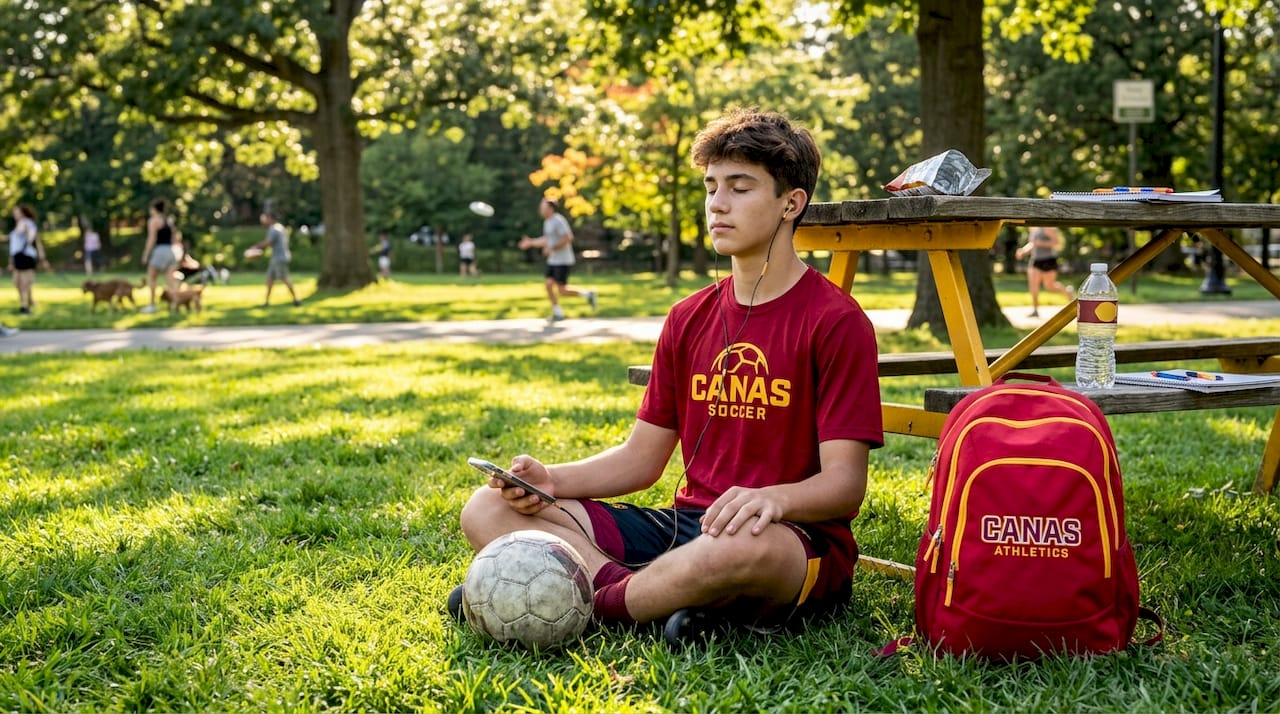
Research shows that 30 minutes of smartphone use before a game measurably impairs decision-making and focus. That is not a minor inconvenience. In a sport where reading a defender’s movement in a split second determines the outcome, reduced cognitive sharpness is a genuine competitive disadvantage.
Social media also shapes how athletes see themselves. Exposure to both positive role models and negative comparisons can affect self-belief and mental health in ways that are not always visible. A player who spends an hour comparing their highlight reel to a Division I commit’s may walk into practice with lower confidence, even if their technical ability is identical.
Here is a practical framework for managing social media without letting it manage you:
- Establish phone-free windows. No phones for at least 90 minutes before training or games. Deliberate phone-free time around athletic activity directly improves on-field decision-making.
- Set a daily posting limit. Spending more than 20 minutes per day creating or reviewing recruiting content is counterproductive for most players under 18.
- Separate your identity from your metrics. Follower counts and likes do not define your recruiting value. Coaches care about what the content says, not how many people engaged with it.
- Mute accounts that trigger comparison. This is not avoidance. It is a performance decision.
- Involve a parent or trusted adult. Having a second set of eyes on your content before posting reduces the risk of an impulsive post derailing your recruiting profile.
“The pressure athletes feel to perform online mirrors the pressure they feel on the field. When both are unmanaged, neither goes well.” — ReConnect Families
Parents play a specific role here. Parental posts focused only on wins can create unspoken pressure for athletes to perform for an audience rather than for the love of the game. Sharing your child’s athletic content is fine. Framing every post around outcomes and rankings is not.
Pro Tip: Create a shared family agreement about what gets posted and when. Athletes who have input into their own digital presence feel more in control and less anxious.
Social media compliance in college soccer recruiting
This section is where many families get caught off guard. The connection between social media activity and NCAA eligibility is direct, and the rules carry real consequences.
Coaches cannot publicly comment on or send direct messages to recruits outside of defined contact periods. However, their monitoring never stops. Understanding this distinction matters because it changes how you interpret coach behavior online and how you manage your own activity.
The more pressing compliance concern for recruits in 2026 involves Name, Image, and Likeness (NIL). Social media posts that include sponsored content, brand partnerships, or paid appearances create immediate reporting obligations.
| NIL Scenario | Compliance Requirement | Consequence of Non-Compliance |
|---|---|---|
| Sponsored post worth $600+ | Report to institution within 5 business days | Suspension and eligibility review |
| Brand gifting (product only) | Varies by institution; disclosure often required | Potential eligibility flag |
| Paid appearance promoted on social | Must be reported regardless of dollar amount | Eligibility risk if undisclosed |
| Organic post with no compensation | No reporting required | None |
NIL deals valued at $600 or more must be reported to your institution within five business days. Missing that window can trigger a suspension. Most 16 or 17-year-olds are not thinking about tax thresholds when a local brand offers them free gear in exchange for a post. Parents need to be the checkpoint here.
NIL compliance obligations must be built into your social media strategy from the beginning, not addressed after the fact. If your athlete is building a personal brand online, that is worth celebrating. Just make sure the reporting process is already in place before the first sponsored post goes live.
Pro Tip: Keep a simple log of every brand interaction, product gift, or paid opportunity connected to your social media. Date, value, and whether it was reported. This protects you in any future eligibility review.
Managing safety risks from social media visibility
Greater online visibility brings greater exposure, and not all of it is from college coaches. Young soccer players as young as 13 or 14 face risks of unsafe contact from individuals posing as agents or scouts on social media platforms.
Agents cannot legally contact minors without parental consent. That rule exists for a reason. But enforcement is difficult when a 15-year-old receives a direct message from someone claiming to represent a Division I program or a professional academy. The message feels exciting. The risk is real.
Social media increases both recruiting opportunity and exposure to risk, which means clubs, parents, and athletes need to operate with clear guardrails. Here is how to protect your athlete without limiting their legitimate recruiting exposure:
- Never share home address, school name, or daily schedule in public posts or direct messages with unverified contacts
- Verify all coach contacts through the official program website before responding to any recruiting inquiry
- Report unsolicited DMs from unknown individuals claiming to be agents or scouts to a parent or club director immediately
- Set DMs to restricted on Instagram and X so only approved followers can message directly
- Educate your athlete on what legitimate coach contact looks like and what red flags signal a scam or unsafe situation
Legitimate college coaches follow NCAA contact rules. They do not slide into a 14-year-old’s DMs with an offer. If something feels off, it probably is. You can also review how athletic directors influence recruiting to better understand what official program outreach actually looks like.
Practical social media strategies for soccer recruits
Knowing how coaches evaluate athletes online is only useful if you act on it. These strategies apply to players at every level, from club soccer to high school varsity programs exploring NAIA scholarship opportunities.
Building a profile that works for recruiting
Your bio is the first thing a coach reads. It should include your full name, graduation year, position, club team, and GPA if it is 3.0 or above. No nicknames. No vague descriptions. Treat it like the header of a resume.
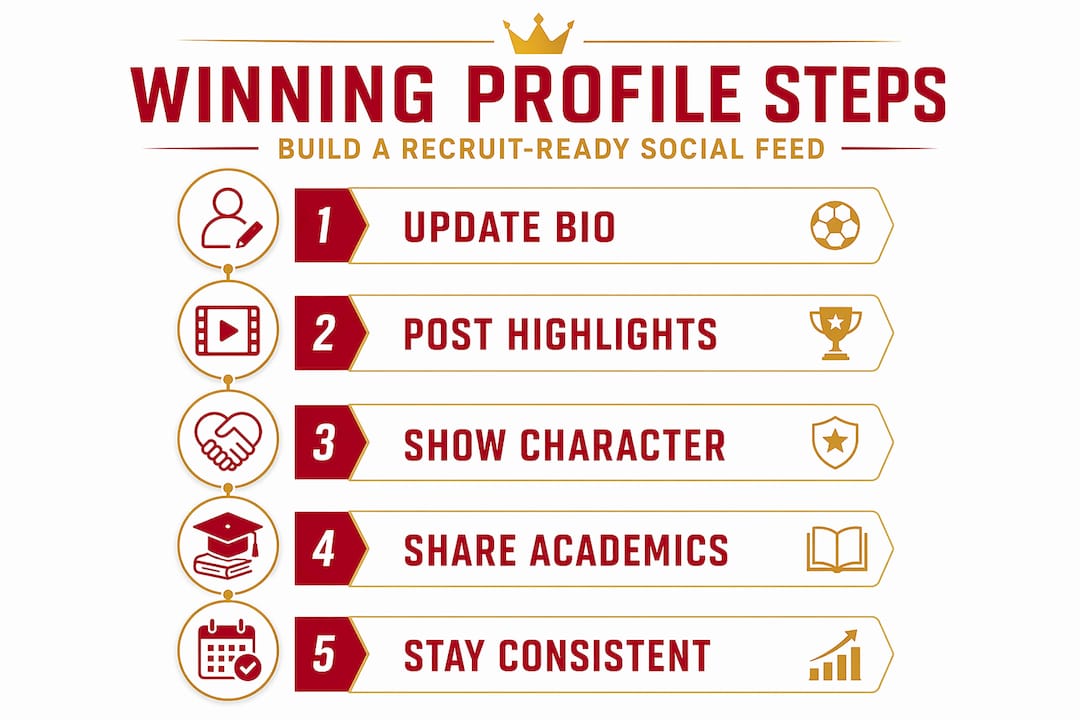
Posting frequency matters more than most players realize. Consistent, authentic posting signals to coaches that you are engaged, disciplined, and worth monitoring over time. Two to four posts per week is a sustainable rhythm for most athletes.
| Content Type | Recommended Frequency | Purpose |
|---|---|---|
| Training clips | 1-2 per week | Demonstrates work ethic and technical development |
| Game highlights | 1 per week during season | Shows competitive performance |
| Academic achievements | 1-2 per month | Signals student-athlete identity |
| Personal character posts | 1-2 per month | Builds trust and shows maturity |
| Team or community content | Occasional | Demonstrates coachability and team orientation |
Pro Tip: Post training content on Tuesday through Thursday when coaches are most active online and less consumed by game-day preparation.
Social media strategies for athletes should account for the full picture of who you are, not just what you can do with a ball. Coaches are recruiting a person into their program for four years. They want to see that you are someone they can trust in the locker room, the classroom, and the community.
Parents can contribute by helping review content before it goes live, tracking which coaches engage with posts, and keeping the digital strategy aligned with the athlete’s overall recruiting timeline. This is a team effort.
My perspective on social media and recruiting
I have worked with hundreds of athletes and families through the recruiting process, and one pattern shows up consistently. The players who treat social media as a passive highlight reel rarely get the traction they expect. The players who understand that coaches are watching constantly, even when silent, approach every post with more intentionality.
What I have seen work is not flashy. It is a calm, consistent presence that shows a coach who this athlete is over months, not just what they did last weekend. Character posts, academic mentions, and genuine team content build a profile that coaches trust. Sporadic highlight dumps do not.
I have also seen families get blindsided by NIL compliance issues they did not know existed. A brand partnership that felt like a fun opportunity became an eligibility headache because no one had a reporting process in place. The compliance side of social media is not optional, and it is not complicated if you set it up correctly from the start.
The mental health dimension is one I take seriously too. Athletes who are constantly monitoring their online presence for coach signals are athletes who are not fully present at training. That trade-off is never worth it. Build your profile deliberately, then put the phone down and play.
— Canas
How Canasrecruiting helps you get this right
Optimizing your social media presence is one piece of a larger recruiting strategy. At Canasrecruiting, we help athletes and families build a complete recruiting plan that includes digital presence, direct coach outreach, compliance guidance, and scholarship positioning across NCAA, NAIA, and junior college programs.
Our Scholarship Positioning System is designed to give athletes a structured, step-by-step path from evaluation to commitment. We handle the complexity so you can focus on performing. Whether you are just starting the recruiting process or need to accelerate your timeline, our team is ready to support you. Schedule a call with a Canasrecruiting expert and get a personalized plan built around your goals, your profile, and your timeline.
FAQ
How do coaches use social media to find soccer talent?
Coaches use platforms like X and Instagram to monitor recruits’ consistency, character, and academic signals over time, not just athletic highlights. More than 80% of D1 coaches research athletes online before making initial contact.
What should a soccer recruit post on social media?
A strong recruiting profile includes training clips, game highlights, academic achievements, and character-driven content posted consistently two to four times per week. Your bio should clearly list your name, graduation year, position, and GPA.
Can college coaches message recruits on social media?
NCAA rules prohibit coaches from sending direct messages or publicly commenting on recruits’ posts outside of defined contact windows. However, follows and likes during quiet periods are permitted and serve as active recruiting signals.
Do NIL deals on social media affect college eligibility?
Yes. Any NIL deal valued at $600 or more must be reported to your institution within five business days. Failure to report can result in suspension and an eligibility review under current NCAA rules.
How does social media affect an athlete’s mental health and performance?
Research shows that smartphone use before games impairs decision-making, and constant social comparison can negatively affect self-belief. Establishing phone-free windows around training and games directly protects both performance and mental well-being.