

A recruiting letter from coaches is a formal written communication sent by a college program to notify an athlete that the coaching staff has identified them as a potential recruit. This letter is the first official signal that a program is tracking your development and wants to open a dialogue. Coaches send these letters by mail, email, or handwritten note, and they appear across NCAA Division I, Division II, Division III, NAIA, and junior college programs. Understanding what a recruiting letter from coaches actually means, and how to respond, is one of the most consequential skills a soccer player and their family can develop.
What is a recruiting letter from coaches?
A recruiting letter from coaches is the industry’s standard term for any written outreach a college coach sends to a prospective athlete to express program interest. The formal recruiting term used by NCAA compliance offices is recruiting correspondence, and it covers everything from a brief email to a multi-page program brochure. Receiving one does not mean you have a scholarship offer. It means you have entered a coach’s recruiting pipeline and that your next move matters.
Coaches use these letters to introduce their program, describe their interest level, and invite further contact. The college soccer recruiting process typically begins with this written touchpoint before any phone call or campus visit occurs. Letters arrive through physical mail, email inboxes, and sometimes recruiting platforms like NCSA (Next College Student Athlete). Each channel carries a slightly different weight, and knowing the difference helps you prioritize your responses.

What does a coach’s recruiting letter typically include?
The content of a recruiting letter reveals how seriously a coach is considering you. A well-structured letter from a Division I or NAIA program will generally contain several identifiable components.
- Program introduction: The coach names their school, conference affiliation, and program history to establish credibility.
- Statement of interest: Phrases like “top recruit” or “potential to contribute” signal how the coach ranks you among their prospects. These are deliberate word choices, not boilerplate.
- Academic fit: Many letters reference GPA requirements, scholarship availability, or academic support resources to gauge your eligibility.
- Next steps: A genuine letter will invite you to respond, schedule a call, or attend a campus visit. Vague letters with no call to action are typically mass mailings.
- Coach’s contact information: A direct email or phone number signals that the coach wants a real conversation, not just a one-way broadcast.
Personalization is the clearest indicator of authentic interest. When a letter references a specific tournament performance, a highlight reel moment, or a conversation you had at a showcase, the coach has done their homework. Generic letters that could apply to any player in any sport carry far less weight.
Pro Tip: Save every recruiting letter you receive in a dedicated folder, physical or digital. Date each one and note the program level. This record becomes your recruiting timeline and helps you track which coaches are escalating their communication.
When do coaches send recruiting letters?
Timing in the recruiting process is governed by the NCAA recruiting calendar, which divides the year into live periods, quiet periods, and dead periods. Each period controls what type of contact is permitted, and letters play a specific role in each phase.
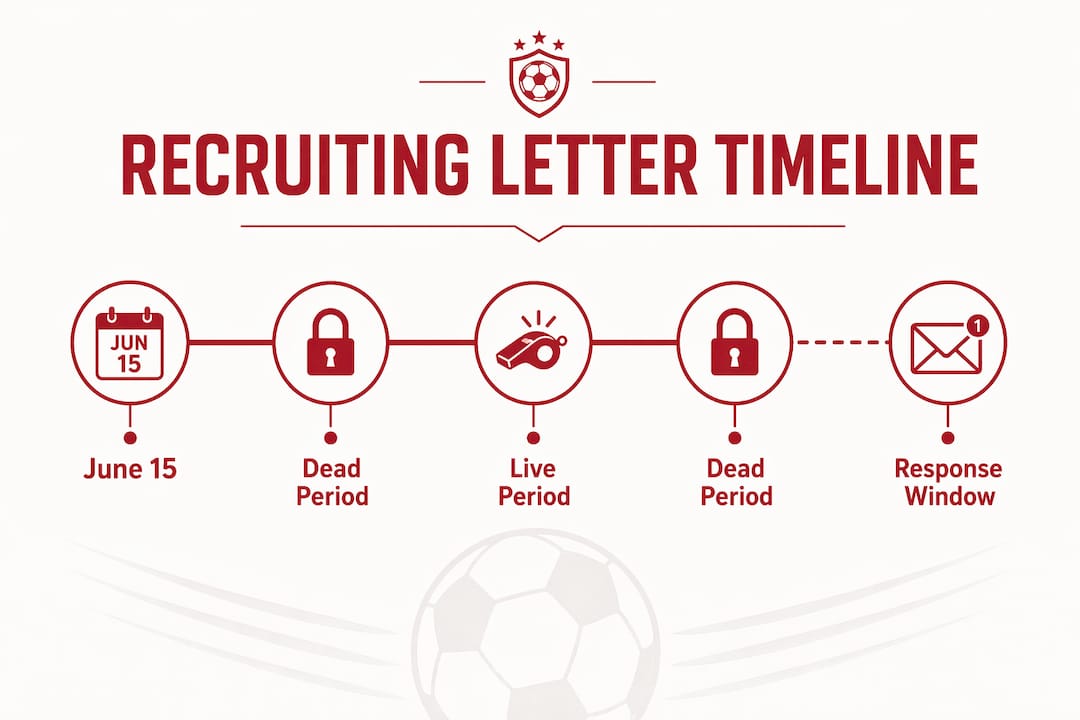
June 15 is the first permissible date for many NCAA Division I coaches to initiate recruiting communication after a recruit’s sophomore year. This date triggers a wave of letters, emails, and calls from programs that have been watching players but could not legally reach out before. Families who understand this date are not caught off guard by the sudden volume of contact.
During NCAA dead periods, coaches cannot make in-person contact or attend events, but written and electronic communication remains fully permitted. This means a letter arriving during a dead period is not a workaround or a gray area. It is a legitimate and strategic recruiting tool. Coaches who write during dead periods are often the most intentional about their outreach.
The table below maps letter types to the recruiting periods when they most commonly appear.
| Recruiting Period | Letter Type Most Common | What It Signals |
|---|---|---|
| Live Period | Email follow-up after evaluation | Coach saw you compete in person |
| Quiet Period | Formal program letter or brochure | Program is maintaining contact |
| Dead Period | Handwritten note or personalized email | High-priority prospect outreach |
| Post-June 15 (Sophomore Year) | Initial contact letter | You are newly on their radar |
Pro Tip: If you receive a letter during a dead period, respond within 48 hours. Coaches are legally limited in what they can do during this window, so a prompt written reply keeps momentum alive and shows professionalism.
How do you tell a real letter from a mass mailing?
Generic batch mailings and form letters often mean you are in a coach’s database, not actively pursued. True recruiting interest requires the coach to have evaluated your film, your measurable data, and your academic profile. A letter that could have been sent to 500 players is not a recruiting letter in any meaningful sense. It is a marketing piece.
Here is how to distinguish the two:
- Personalized letters reference your name, your club team, a specific game or tournament, or a conversation you previously had with the coach.
- Form letters use generic language like “We are building our program” or “We would love to learn more about you” without any reference to who you are or what you have done.
- Handwritten notes carry the highest signal value. Handwritten letters sent within 48 hours of an event create a strong signal of genuine coach interest, especially when personalized to reference specific details from that event.
- Red flags include letters with no coach signature, no program-specific details, or requests for payment to be “evaluated.” Legitimate coaches do not charge athletes for interest.
If you are unsure whether a letter is genuine, cross-reference it with the program’s official website and verify the coach’s name and contact information. Canasrecruiting recommends checking recruiting scam warning signs before responding to any letter that feels off. Protecting your time and your family’s trust in the process starts with verification.
True recruiting interest typically requires the coach to have evaluated your film, measurable data, and academics beyond just being listed in a recruiting database. A letter alone does not confirm that level of evaluation has occurred.
How should you respond to a recruiting letter?
Responding well to a recruiting letter is one of the most direct ways to advance your recruitment. Most players either do not respond at all or send a reply that fails to move the conversation forward. Both are missed opportunities.
Follow these steps to respond effectively:
- Reply within 48–72 hours. A prompt response signals professionalism and genuine interest. Coaches are evaluating your character alongside your athletic ability.
- Address the coach by name and title. Use “Coach [Last Name]” in your greeting. Avoid casual openers like “Hey” or “Hi there.”
- Confirm your interest in the program. State clearly that you are interested in learning more. Coaches want to know you are engaged, not just collecting letters.
- Include your athletic and academic profile. Share your graduation year, GPA, club team, position, and a link to your highlight reel. Keep it concise and factual.
- Ask a specific question about the program. Questions about playing style, roster needs, or scholarship availability show you have done research and are serious about fit.
- Request a call or campus visit if appropriate. Emailing coaches early and respectfully builds recognition and can lead to meaningful recruiting conversations beyond the initial letter.
During dead periods, recruits can strengthen recruiting conversations by sending updates and responding to coach communications without expecting in-person visits or evaluations. Use these windows to share recent game results, academic achievements, or updated highlight footage.
What do real recruiting letter examples reveal?
Reviewing examples of coaching recruitment letters helps you calibrate your own expectations. Different letter types communicate very different levels of interest.
- The personalized letter: “Coach Martinez from State University writes that he watched your performance at the Regional Showcase on March 12 and believes your technical ability and positioning align with what the program needs for the 2027 class.” This letter confirms the coach attended your event and has a specific roster need in mind.
- The program brochure letter: A glossy mailer with the school’s logo, general scholarship information, and a QR code to the athletics website. This signals you are in a broad database. It is not a scholarship offer or a personal evaluation.
- The handwritten note: A brief, handwritten card referencing your name and a specific play or moment. Written correspondence such as handwritten letters is permitted during dead periods and creates differentiation when part of a strategic communication plan. Receiving one means the coach invested personal time in you.
- The follow-up email: Sent after a phone call or campus visit, this letter recaps the conversation and outlines next steps. It is a strong indicator that you are a priority prospect.
Use these benchmarks to assess where you stand. A pattern of personalized letters and follow-up emails from the same program signals serious interest. A single brochure does not.
Key takeaways
A recruiting letter from coaches is a formal signal of interest, and how you interpret and respond to it directly shapes your scholarship outcome.
| Point | Details |
|---|---|
| Definition matters | A recruiting letter is official recruiting correspondence, not a scholarship offer. |
| Personalization signals priority | Letters referencing specific performances or conversations carry far more weight than form mailings. |
| Timing follows NCAA rules | June 15 and dead period windows govern when and how coaches can send letters. |
| Response speed counts | Replying within 48–72 hours with your athletic and academic profile advances your recruitment. |
| Verify before trusting | Cross-check coach names and program details to avoid misleading or fraudulent outreach. |
What most families get wrong about recruiting letters
The most common mistake I see families make is treating every letter as equal. A brochure from a Division I program feels exciting, and it should. But a handwritten note from a Division II coach who watched your last three games is worth ten times more in practical recruiting terms. Excitement is understandable. Misreading the signal costs you time and momentum.
The second mistake is waiting. Families assume the coach will follow up. Sometimes they do. More often, the coach is running a list of 40 prospects and moving toward the ones who respond with clarity and speed. A well-written reply within 48 hours does not just keep you in consideration. It moves you up the list.
I also want to address the value of written letters specifically. In a world where most communication is digital, a physical letter or handwritten note from a coach carries a weight that an email cannot replicate. When a coach takes the time to write by hand, they are making a deliberate investment. Treat it accordingly. Write back. Reference what they wrote. Show them you read it.
Finally, understanding NCAA scholarship rules before you receive letters puts you in a far stronger position to evaluate what each program is actually offering. Knowledge of the rules is not optional. It is the foundation of a confident recruiting process.
— Canas
How Canasrecruiting helps you navigate the recruiting process
Canasrecruiting works directly with soccer players and their families to turn recruiting letters into real scholarship conversations. Our Scholarship Positioning System™ is built to help athletes at the NCAA, NAIA, and junior college levels present themselves with precision to the programs most likely to offer meaningful opportunities.
We handle direct coach outreach, help you craft professional responses to recruiting correspondence, and guide you through every stage of the recruiting calendar. If you have started receiving letters and are unsure what they mean or how to respond, we can help you build a clear, structured plan. Explore our recruiting process overview or schedule a call with a Canasrecruiting expert to get started.
FAQ
What is a recruiting letter from coaches?
A recruiting letter from coaches is a written communication sent by a college program to notify an athlete of their interest. It is formally called recruiting correspondence and can arrive by mail, email, or handwritten note.
Does receiving a recruiting letter mean i have a scholarship offer?
No. A recruiting letter signals that a coach has identified you as a prospect, not that a scholarship has been offered. Scholarship offers come later in the process after evaluations and official visits.
When can NCAA coaches legally send recruiting letters?
NCAA Division I coaches can begin sending letters to many recruits starting june 15 after their sophomore year. Written communication is also permitted during dead periods when in-person contact is restricted.
How do i know if a recruiting letter is genuine?
A genuine letter references your name, your team, or a specific performance. Personalized communication that includes specific details about you signals real interest, while generic form letters typically indicate you are in a broad database.
What should i include when responding to a recruiting letter?
Your response should include your graduation year, GPA, club team, position, and a highlight reel link. Ask a specific question about the program to show genuine interest and keep the conversation moving forward.